
Adelaide Specialist Clinic · Cardiologist · Cardiac imaging · 280 North East Road, Klemzig
Excellence in cardiology care.
Consultant cardiologist care in Klemzig, ten minutes from the Adelaide CBD: chest pain, heart failure, arrhythmia, high blood pressure and familial hypercholesterolaemia, pericarditis and myocarditis, with bulk-billed echocardiography, CT coronary angiography on photon-counting CT, and cardiac MRI reported by a Level 3 certified CMR cardiologist.
Bookings are taken by phone or email, Monday to Friday 9:00–17:00. New patients need a current referral from their GP. GPs and specialists: how to refer.
4.9 from 15 Google reviews · Cardiologist in Klemzig, South Australia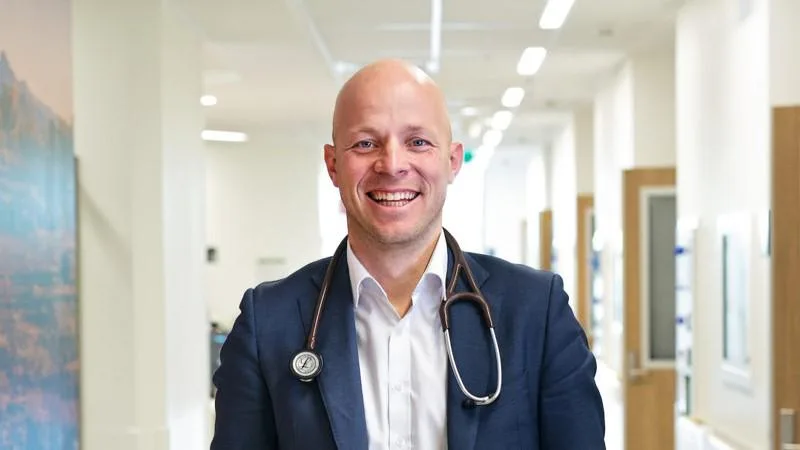
What we offer
Cardiology care in Adelaide, with the tests and follow-up close at hand.
Heart and vascular
Consultation and ongoing care for chest pain, heart failure, arrhythmia, high blood pressure and cholesterol, including familial hypercholesterolaemia, pericarditis and myocarditis, and the prevention of heart attack and stroke.
- Echocardiography, bulk billed, including stress echo
- Coronary CT angiography on photon-counting CT, and calcium scoring
- Cardiac MRI, Level 3 certified reporting
- ECG, Holter and 24-hour blood pressure monitoring
- Cardiovascular risk assessment
- Post-hospital and post-procedure follow-up
Quick to arrange
Phone our staff to arrange an appointment with our patient-centric specialist. New patients need a current referral from their GP or another specialist.
- Referrals accepted by HealthLink, fax or email
- Confirm, reschedule or cancel in the Patient Hub
- Reminders by SMS and email
Your records, securely
An online portal for patients and carers, on any device, holding appointments, letters, results and invoices, with fee estimates before a procedure.
- Registration and Medicare details online
- Letters, certificates and results
- View and pay invoices
Everything in one place
A modern new building with GP clinic, pharmacy, Clinpath pathology, allied health, mental health and psychology, nutrition and a café.
- Ample parking on site
- Close to the CBD, on North East Road
- Ground-floor access
Echocardiography · Bulk billed
An ultrasound of your heart, bulk billed at the clinic.
An echocardiogram uses ultrasound to show how well the heart pumps, whether the valves open and close properly, and whether the heart muscle is thickened, enlarged or stiff. It involves no radiation and no injection, takes 30 to 45 minutes, and is reviewed by A/Prof Verjans, who is a board-certified echocardiography cardiologist. Echocardiograms requested by the clinic are bulk billed, so there is no out-of-pocket cost with a valid Medicare card.
No preparation
Eat, drink and take your usual medicines. Wear a top that is easy to remove; a gown is provided. For a stress echocardiogram, wear comfortable shoes, avoid a heavy meal for two hours and ask whether a beta blocker should be withheld that morning.
30–45 minutes
You lie on your left side while the sonographer moves a probe with gel over the chest. ECG stickers record the rhythm. You may be asked to hold your breath briefly or change position.
Results with A/Prof Verjans
The images and measurements are reviewed by A/Prof Verjans and discussed with you, often at the same visit. The report goes to your GP and appears in your Patient Hub.
Echocardiograms requested by the clinic are bulk billed. Bring your Medicare card and referral. Holter monitors and 24-hour blood pressure monitors can be fitted at the same visit.
CT coronary angiogram · Photon-counting CT
A detailed picture of your heart's arteries, without a catheter.
A CT coronary angiogram (CTCA) is a test that shows whether there is plaque or narrowing in the arteries supplying the heart, and whether it may need treatment. It is done on a CT scanner with an injection of contrast dye through a cannula in the arm, and most patients are home the same morning. A/Prof Verjans refers CTCA to Jones Radiology at SAHMRI on North Terrace, where the scan is performed on a photon-counting CT scanner.
Filmed at the SAHMRI photon-counting CT, Adelaide.
No fasting needed
Water and clear fluids are encouraged. Avoid smoking or vaping for 4 hours before the scan. Keep taking beta blockers as prescribed. Withhold Viagra or Cialis for 3 days beforehand, if your prescribing doctor agrees, because they cannot be combined with the GTN used during the test.
Pre-scan, 30–75 min
Nurses check your blood pressure and heart rate. You may be given a tablet to slow the heart, then wait about an hour for it to work. A cannula is placed in a vein for the contrast.
Scan, 15–30 min
You lie on your back with arms raised, connected to a heart monitor. A GTN spray under the tongue widens the arteries, then you hold your breath for a few seconds while the images are taken. The contrast can give a brief warm feeling.
Post-scan, 30 min
Staff observe you, recheck your vitals and remove the cannula. GTN can cause a headache that settles quickly. Allow 2 to 2½ hours in total. The report goes to A/Prof Verjans, who discusses the result with you at follow-up.
Contrast reactions such as a rash occur in fewer than 1 in 100 patients and severe reactions are extremely rare. Tell the radiology team about kidney problems, previous contrast reactions, asthma, diabetes medication or pregnancy.
Cardiac MRI · Level 3 certified
Cardiac MRI, reported by a Level 3 certified CMR cardiologist.
Cardiac magnetic resonance imaging (CMR) is the most accurate test for measuring the heart's size and pumping function, and the only test that shows scarring and inflammation inside the heart muscle without a biopsy. A/Prof Verjans holds Level 3 certification in cardiovascular MRI, the highest level recognised by the Society for Cardiovascular Magnetic Resonance, and personally reviews and interprets the scans he requests. Scans are performed by Jones Radiology, and use no radiation.
Safety questionnaire
Keep taking your prescribed medications. You will complete an MRI safety questionnaire: tell the team about pacemakers, defibrillators, loop recorders, metal implants, previous surgery, kidney disease, claustrophobia or pregnancy. Many modern devices are MRI-conditional, but must be checked first. Remove jewellery, watches, chains, earrings and glasses; you may be asked to change into a gown.
45 minutes to 1 hour
You lie head-first in the magnet with a light coil over the chest and electrodes monitoring your heart rate. You need to stay as still as possible and follow a series of breath-holds of about 10 to 15 seconds each. The scanner makes loud knocking sounds; headphones or earplugs are provided. In most cases a gadolinium contrast injection through a cannula is used to show scar and inflammation.
Reviewed by A/Prof Verjans
You can drive and return to normal activities immediately. Brief mild nausea from the contrast occasionally occurs; serious reactions are extremely rare. A/Prof Verjans reviews the images and discusses the findings with you at follow-up, with a copy to your GP and to the Patient Hub.
Cardiac MRI attracts a Medicare rebate for specific indications when requested by a cardiologist; we will tell you whether your scan qualifies and the expected cost before it is booked.
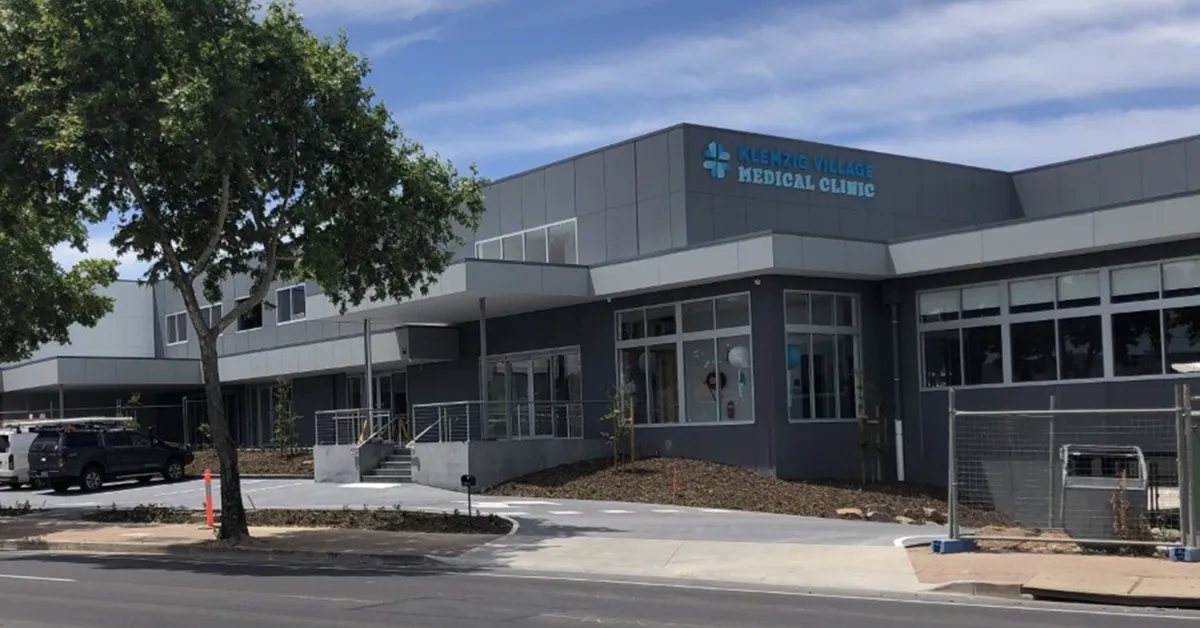
Klemzig Village
A new health precinct at 280 North East Road.
The Adelaide Specialist Clinic sits within Klemzig Village, a purpose-built facility near OG Road. Blood tests, prescriptions, a GP visit and a coffee afterwards happen in the same building, so a specialist appointment rarely means a second trip.
Our doctors
Your cardiologist in Adelaide.
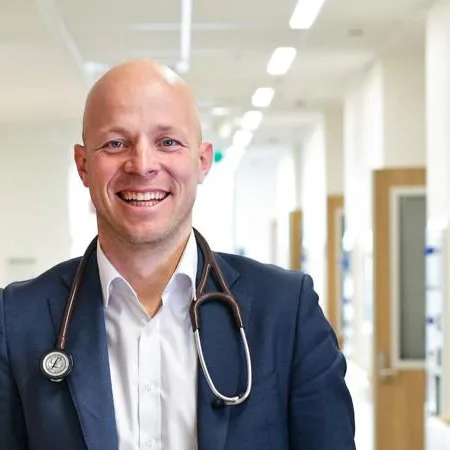
Associate Professor Johan Verjans, Cardiologist
Cardiologist · Director, Adelaide Specialist Clinic · MD PhD FRACP · SCMR Level 3 CMRDr Johan Verjans is a physician-scientist combining cutting-edge research and patient care as a cardiologist at the Royal Adelaide Hospital. He is an Associate Professor at the University of Adelaide, is Platform Leader for AI at SAHMRI, and directs the Verjans Liao Lab at the Australian Institute for Machine Learning, where his group has taken AI decision-support systems into SA Health emergency departments.
- Coronary artery disease and chest pain
- Cardiac MRI (Level 3 certified) and cardiac CT
- Myocarditis and pericarditis
- Familial hypercholesterolaemia and lipid disorders
- Heart failure and cardiomyopathy
- Preventive cardiology and hypertension
- Echocardiography
- AI-assisted diagnosis
A/Prof Johan Verjans is a clinician-scientist at the Royal Adelaide Hospital with a research focus on cross-disciplinary translational research and a track record in leadership. During his tenure as Deputy Director at the Australian Institute for Machine Learning (AIML), a world-renowned institute in machine learning, and as platform leader for AI at SAHMRI, he has combined experience in molecular medicine and clinical research with extensive experience working with engineers on advanced imaging techniques, and with computer scientists applying machine learning to medical problems, to translate research into the clinic.
He graduated in medicine from Maastricht University via an MD-PhD track after being awarded the DiPalma Fellowship to work with Professor Narula in Philadelphia and at UC Irvine. During cardiology training he was awarded a Rubicon Fellowship by the Dutch Science Foundation to complete a post-doctoral fellowship at Massachusetts General Hospital / Harvard Medical School, followed by a clinician-scientist award at the University Medical Centre Utrecht. He was recruited by the University of Adelaide in 2017 and in 2022 received the University's Future Industry Making Fellowship.
Since then he has formed the Medical Machine Learning group at AIML, using his combined clinical, biomedical and technical expertise to lead a rapidly growing group of clinicians, biomedical researchers and computer scientists, with the objective of making the University of Adelaide a global leader in AI in healthcare. The group has grown to more than 40 members, has won international technology challenges, and holds contracts with pharmaceutical and technology companies including GSK, Roche, Siemens Healthineers and Medtronic. Its work has drawn international attention, including an invitation from a consortium of medical AI institutes, and the institute was nominated AI Centre in Medicine of the Year in 2022 by the AI Global Summit.
His interest in AI and machine learning, built over the past decade, reflects an aim to weave these techniques into clinical practice, and he works with government bodies to achieve this. He advises companies on AI strategy and has served on global advisory boards. He collaborates with SA Pathology, SA Pharmacy, the Women's and Children's Hospital and the Royal Adelaide Hospital on digital and AI projects for SA Health, including RAPIDx AI (the world's first AI randomised controlled trial in the emergency department), AutoMedic (SA Health's largest AI project, automating medication review across SA Health) and Cardiomics (improving guideline adherence after myocardial infarction).
His research has been published in leading cardiology journals and computer-science conferences, including CVPR, ICCV, MICCAI, NEJM, Circulation, JACC, JAMA Cardiology, Nature Reviews Cardiology, JACC Cardiovascular Imaging, Light: Science & Applications and IEEE Transactions on Medical Imaging. His team won the global Medical VQA challenge organised by the NIH, in which a computer answers open-ended questions from medical images, an early forerunner of medical ChatGPT.
He has presented at all major cardiovascular conferences, including several Young Investigator award sessions, chaired the Australian Society for Molecular Imaging conference, and served on the Publications Committee of the Society for Cardiovascular Magnetic Resonance, evaluating clinical imaging guidelines and consensus statements. He was lead author of a chapter in the first book on AI in Medicine (Springer Nature) and contributed to further chapters, including an international expert group standardising machine-learning methods in medical imaging. He is an editorial board member of the European Heart Journal Digital Health and Frontiers in Cardiology, and a previous Associate Editor of the Netherlands Heart Journal. He is frequently invited to give keynote presentations at national and international meetings on AI, digital health, imaging and innovation.
As a mentor he guides early-career researchers and students, creating an academic environment that brings together engineers, clinicians and computer scientists.
Patient Hub
Your clinical information, appointments and invoices in one secure place.
The Patient Hub is the clinic's online portal for patients and carers. It works on a computer or a phone, and access is by invitation: once you are registered with us, we email you a link to set up your login.
Get a referral
Ask your GP to send a referral to HealthLink adelspec, fax (08) 7089 9522 or email. You can also upload it yourself in the Hub.
Book by phone
Call (08) 7089 9533 during office hours. We will confirm the appointment and send your Patient Hub invitation.
Complete registration online
Enter personal, billing and Medicare or health-fund details, and review a fee estimate for any procedure before you attend.
After your visit
Letters, certificates, imaging and pathology results, and your current medication list appear in the Hub, along with reminders for scheduled check-ups.
In the Patient Hub you can
- Schedule, confirm or cancel appointments
- Upload referrals and supporting documents
- View medical letters, referral letters and certificates
- See imaging and pathology results
- Review medications, allergies and your doctor's instructions
- Track clinical measurements over time
- View and pay invoices, and see fee estimates
Carers can be given their own login to manage a patient's account. Ask our staff when you register.
For referrers
Refer to a cardiologist by HealthLink, fax or email.
We accept referrals from general practitioners and other specialists. Electronic referrals through HealthLink arrive directly in our practice software and are triaged the same day.
Patient information
Our services and heart-health guides.
CT coronary angiogram in Adelaide
What the scan shows, how to prepare, and why photon-counting CT at SAHMRI.
Read →Bulk-billed echocardiogram in Adelaide
Ultrasound of the heart for valves, pumping function and heart failure, bulk billed.
Read →Cardiac MRI in Adelaide
Myocarditis, pericarditis, cardiomyopathy and scar, reported by a Level 3 certified CMR cardiologist.
Read →Chest pain assessment
How a cardiologist works out whether chest pain is coming from the heart.
Read →Heart failure clinic
Diagnosis, medication optimisation and follow-up for weakened or stiff hearts.
Read →Cardiologist in Klemzig
Local heart care for north-east Adelaide, at Klemzig Village on North East Road.
Read →Familial hypercholesterolaemia
Inherited high cholesterol: testing, treatment and family screening.
Read →Chest pain: when to see a cardiologist
The symptoms that need an ambulance, and the ones that need an appointment.
Read →Photon-counting CT explained
Why the newest CT detectors matter for imaging the heart's arteries.
Read →Frequently asked questions
Seeing a cardiologist in Adelaide: common questions.
Do I need a referral to see a cardiologist at Adelaide Specialist Clinic?
Yes. New patients need a current referral from their GP or another specialist so that Medicare rebates apply. Your GP can send it to HealthLink EDI adelspec, fax (08) 7089 9522 or email, or you can upload it to the Patient Hub.
How do I book an appointment?
Call (08) 7089 9533 Monday to Friday, 9:00 to 17:00, or email [email protected] with your name, phone number and referring GP. We do not use online booking forms.
Is a CT coronary angiogram covered by Medicare?
A Medicare rebate applies when the scan meets Medicare criteria and is requested by a specialist. Jones Radiology confirms any out-of-pocket fee at the time of booking. Ask our staff for a fee estimate before your scan.
How long does a first cardiology appointment take?
Allow about 30 minutes for a new-patient consultation, which includes a history and examination. Tests such as an ECG, echocardiogram or Holter monitor are booked separately.
What should I bring to my appointment?
Your referral, Medicare or health-fund card, a current medication list, and information on your medical history, family history and any allergies. Bring previous test results if you have them.
Where do I park at Klemzig Village?
There is ample free on-site parking at Klemzig Village, 280 North East Road, near the OG Road intersection. The clinic has ground-floor access.
Does the clinic offer telehealth?
Both initial and follow-up consultations can be done by telehealth where clinically appropriate. Please ask when booking.
Are echocardiograms bulk billed?
Yes. Echocardiograms requested by the clinic are bulk billed, so there is no out-of-pocket cost with a valid Medicare card and referral. Consultations, CT coronary angiograms and cardiac MRI attract a Medicare rebate with a gap; we tell you the cost before booking.
How long is a referral valid?
A GP referral to a specialist is valid for 12 months from your first visit; a referral from another specialist lasts three months. If your referral has expired, ask your GP for a new one before your next appointment.
Can I be seen quickly if my GP thinks it is urgent?
Yes. Referrals are triaged on the day they arrive, and referrals that describe chest pain on exertion, new breathlessness, blackouts or an abnormal ECG are given the next available appointment. Ask your GP to mark the referral urgent and phone us.
What happens at a first appointment?
A/Prof Verjans takes a detailed history, examines you and usually records an ECG in the rooms. Depending on the findings he may arrange tests such as an echocardiogram, Holter monitor or CT coronary angiogram. You leave with a plan, and your GP receives a letter within a few days.
Will I get my results on the day?
An ECG is read immediately. Echocardiograms are usually discussed at the same visit or the next. CT coronary angiograms and Holter monitors are reported by the imaging provider and reviewed with you at a follow-up appointment, normally within one to two weeks.
Can my partner or a family member come with me?
Yes, and we encourage it, particularly for a first visit or when results are being discussed. Carers can also be given their own Patient Hub login.
Do you see children or teenagers?
No. A/Prof Verjans is an adult cardiologist. Patients under 18 are best referred to the Women's and Children's Hospital cardiology service.
Should I stop my medications before a test?
Do not stop any medication unless we or the imaging provider tell you to. For a CT coronary angiogram, keep taking beta blockers; for a stress echocardiogram, we may ask you to withhold a beta blocker on the morning. Instructions are given when the test is booked.
Do I need to see a cardiologist if I have high cholesterol or high blood pressure?
Most people are well managed by their GP. A cardiology review is useful when levels are hard to control, when there is a strong family history of early heart disease, or when a calcium score or CT scan would settle whether treatment is needed.
Doctors in the media
Explaining heart health to South Australians.
CT scanning of the coronary arteries
A/Prof Verjans on how coronary CT angiography images the heart's arteries and what it can tell a patient with chest pain.
Watch →A/Prof Verjans on his research
Bringing machine learning from the laboratory into the cardiology clinic and the emergency department.
Watch →Heart attack: the facts
Warning signs, what happens in the artery, and why time matters when symptoms start.
Listen →Bypass grafts explained
What a coronary artery bypass does, who needs one, and how it compares with stents.
Listen →Preventing the spread of COVID-19
Practical advice for patients with heart conditions during the pandemic.
Listen →$1.25 million initiative to boost heart health
Funding for research bringing machine learning to the diagnosis of heart disease in South Australia.
Read →Applying AI to stay one step ahead
How AI is being used to support clinicians in emergency departments and cardiology across SA Health.
Read →Contact
Cardiologist in Klemzig, north-east Adelaide.
- Address
- Adelaide Specialist Clinic
280 North East Road
Klemzig SA 5087Klemzig Village, near the OG Road intersection - Phone
- (08) 7089 9533
- Fax
- (08) 7089 9522
- [email protected]
- HealthLink
- adelspec
- Mon – Fri
- 9:00 – 17:00
- Sat – Sun
- Closed
- Public holidays
- Closed
Appointments are booked by phone or email; we do not use online booking forms. Emails are answered during office hours. Please do not send detailed medical information by email. In an emergency, call 000 or go to your nearest emergency department.
Getting here
280 North East Road,
Klemzig SA 5087
- By car: on North East Road at OG Road, about 10 minutes from the CBD. Ample free parking on site at Klemzig Village.
- By bus: O-Bahn and North East Road services stop at Klemzig Interchange, a short walk away.
- Access: ground-floor entry, with the GP clinic, pharmacy and Clinpath in the same building.